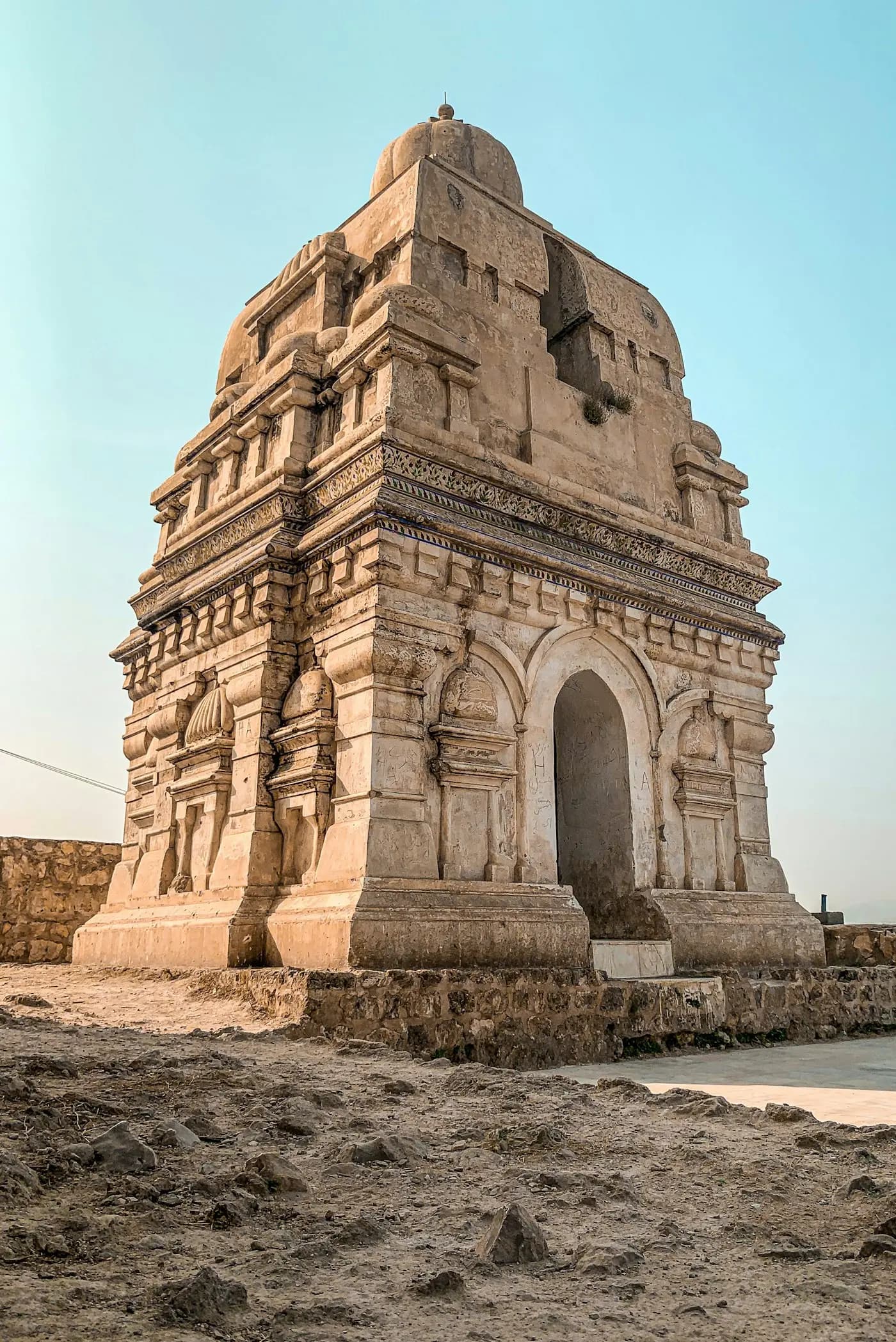
Quick Facts — Katas Raj Temples
📍 Location
Katas, Choa Saidanshah, Chakwal
🕌 Type
Hindu Temple Complex
📅 Age
~1,500 – 5,000+ years
💰 Entry Fee
FREE
🕐 Open
Sunrise to Sunset (Daily)
📍 Distance
40 km from Chakwal city
🚗 From Rawalpindi
~120 km (2 hours)
🚗 From Lahore
~250 km (3.5 hours)
â TripAdvisor Rating
4.5 / 5 (Top Attraction)
📷 Photography
Allowed (free)
🧭 GPS
32.7144°N, 72.7003°E
🏛️ Era
Hindu Shahi Dynasty (615–950 CE)
History of Katas Raj Temples
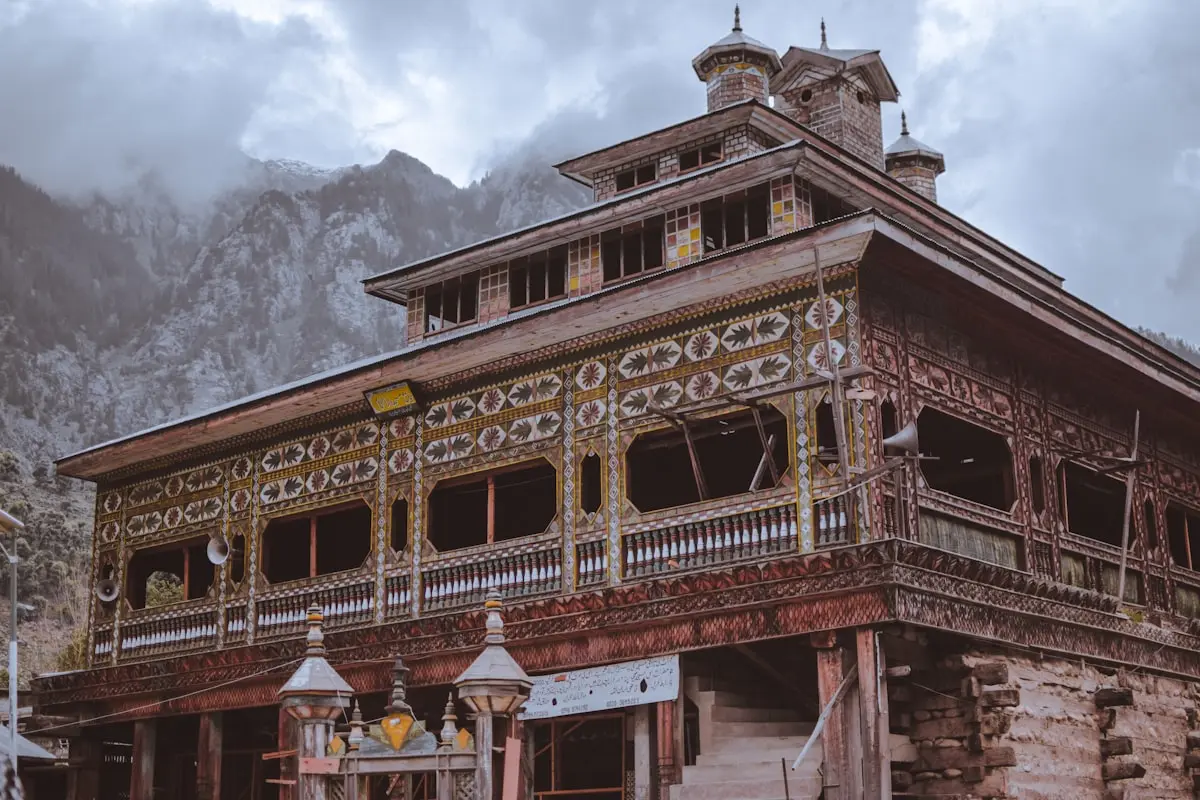
Katas Raj Temples date back to the Hindu Shahi dynasty, 7th–10th century CE
Katas Raj Temples — also known as Qila Katas or Satghara — represent one of the most significant and spiritually important Hindu temple complexes in all of South Asia. Located near Choa Saidanshah in Chakwal district, Punjab, the complex sits at an altitude of approximately 2,000 feet (610 meters) on the Potohar Plateau.
The site's history stretches back over 5,000 years, with its earliest connections to the ancient Hindu epic Mahabharata. According to Hindu tradition, the Pandava brothers — the five heroes of the Mahabharata — spent part of their 12-year exile in this very location. The sacred pond (kund) at the center of the complex is mentioned in ancient Sanskrit texts.
The temple structures themselves primarily date to the Hindu Shahi dynasty period (615–950 CE), with some structures from earlier Buddhist periods also present. The complex was extensively documented by the British archaeologist Alexander Cunningham in 1872–73, who identified it as one of the most important archaeological sites in the Punjab region.
The site was significantly restored between 2005 and 2018, with the Pakistan government investing in preservation of the ancient structures under the Evacuee Trust Property Board (ETPB). Today, Katas Raj is an active Hindu pilgrimage site and draws both religious visitors and history enthusiasts from across Pakistan and abroad.
âš¡ Did You Know?
In 2016, the Supreme Court of Pakistan took suo motu action when the sacred Katas Kund pond was found nearly dry due to groundwater extraction by nearby cement factories. The Court ordered the factories to stop extraction and restore water levels — a landmark ruling for cultural heritage protection in Pakistan.
Architecture & Structures
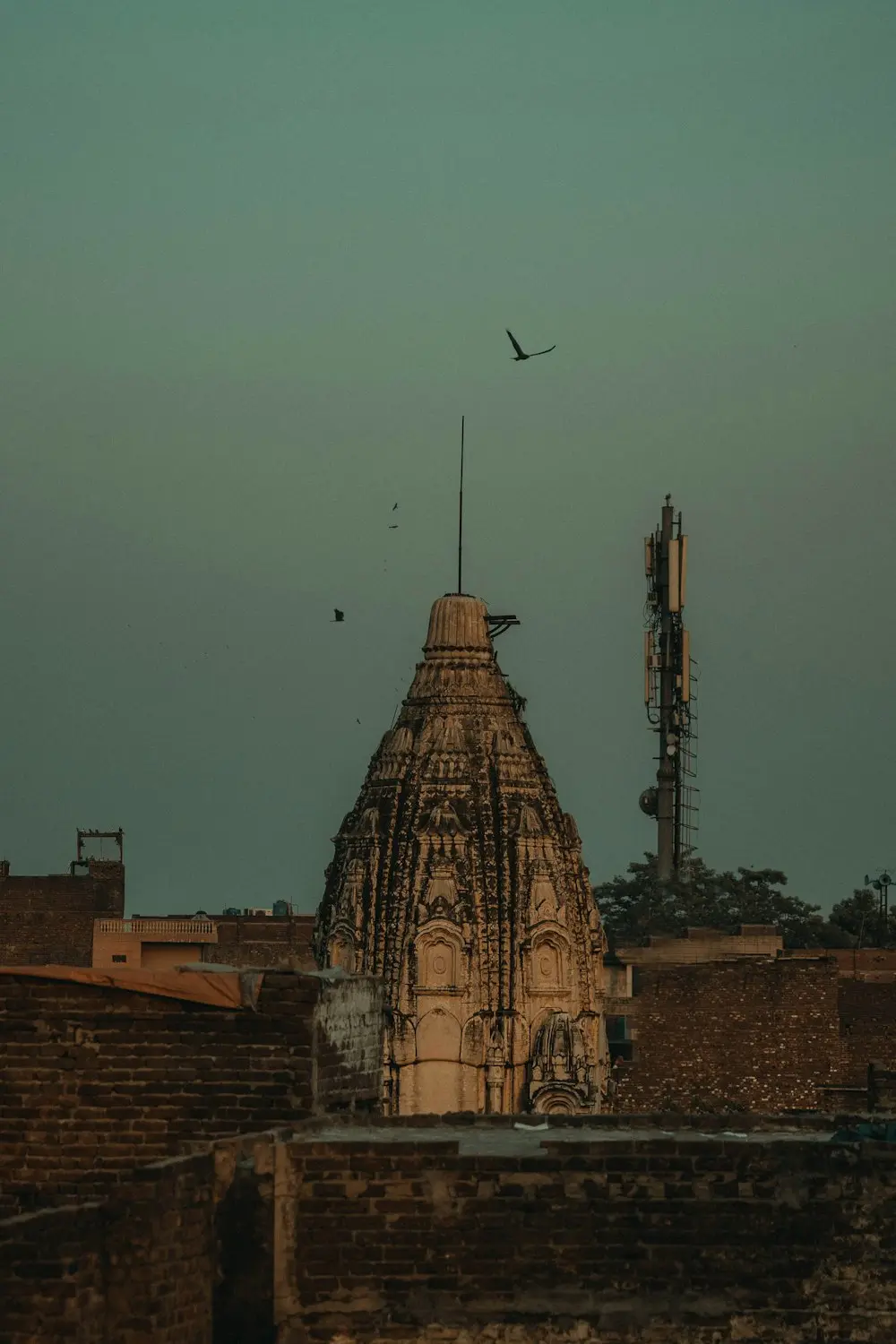
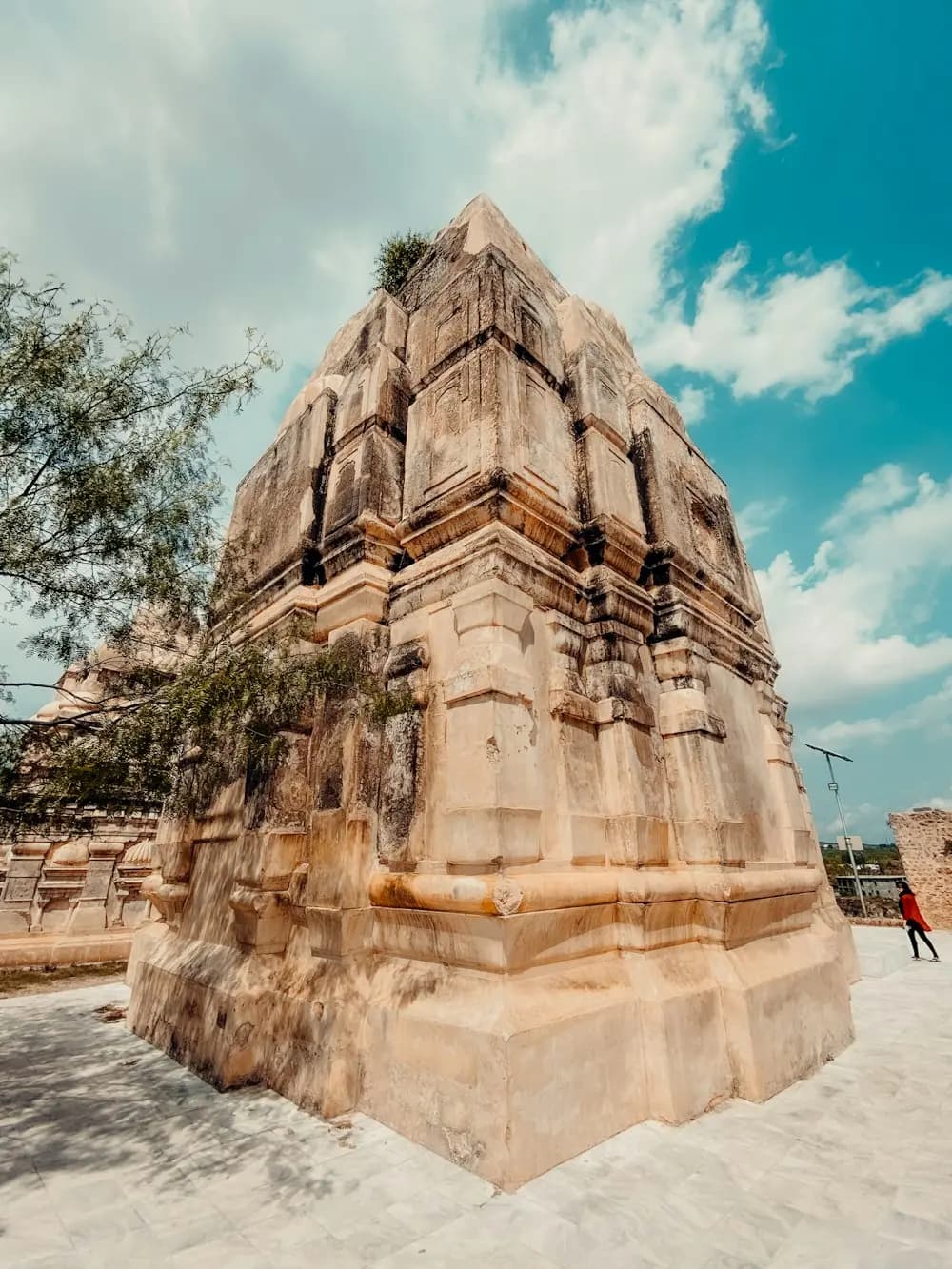
The Katas Raj complex spans approximately 4 hectares and features a remarkable collection of temples from different historical periods, arranged around the central sacred pond. The architectural style reflects a blend of Hindu Shahi, Buddhist, and early Islamic influences, making it a unique testament to the region's multi-religious history.
The temple structures are built predominantly from soft yellow sandstone quarried from the nearby Salt Range. Architectural features include distinctive dentils, trefoil arches, fluted pillars, and pointed shikhara-style roofs — characteristic of the North Indian temple architecture tradition of the 7th–10th centuries.
Satghara Complex (Seven Temples)
The most iconic cluster of temples at Katas Raj — a group of seven ancient temples arranged around the sacred pond. These date primarily to the 7th–9th century CE and represent the spiritual heart of the complex.
Ram Mandir (Ramachandra Temple)
One of the largest and best-preserved temples at the site, dedicated to Lord Ram. Believed to be the location where the Pandavas sought refuge during their exile. Features intricate stone carvings.
Hanuman Mandir
A smaller temple dedicated to Lord Hanuman, featuring traditional North Indian shikhara architecture. Still actively visited by Hindu worshippers during religious festivals.
Shiva Temple
The central Shiva temple overlooking the sacred pond, considered the most holy structure in the complex. Houses a Shivalinga believed to have been installed by Lord Krishna himself according to Hindu tradition.
Buddhist Stupa Remains
Evidence of an earlier Buddhist presence at the site, with remains of a stupa dating to the Mauryan period (3rd century BCE). This demonstrates the site's religious significance across multiple faiths.
Haveli of Hari Singh Nalwa
A large mansion adjacent to the temple complex, built during the Sikh period by Hari Singh Nalwa — the legendary general of Maharaja Ranjit Singh's Sikh Empire.
The Sacred Katas Kund (Pond)
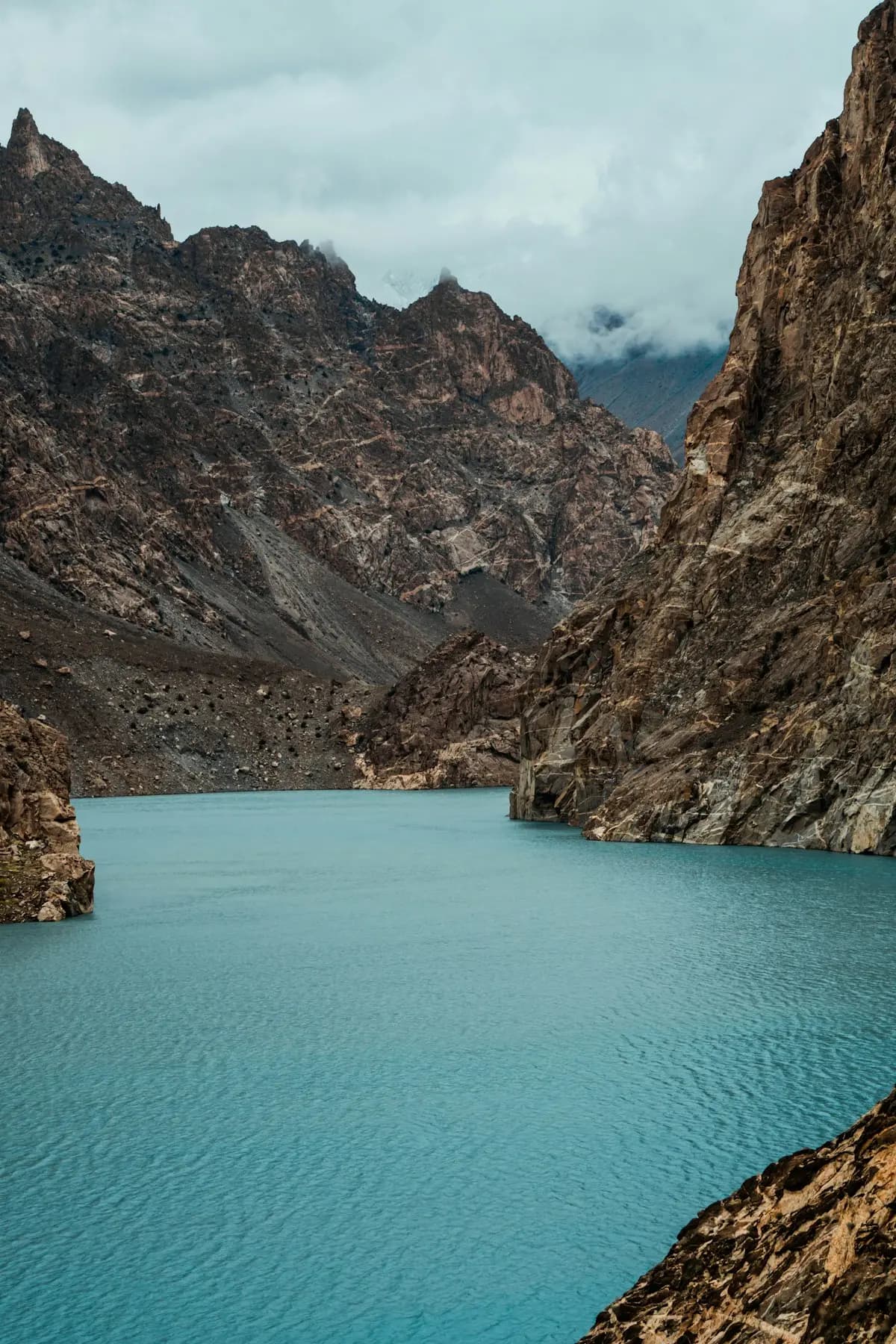
The Katas Kund — the sacred pond at the center of the temple complex
The Katas Kund — the sacred square pond at the heart of the temple complex — is the spiritual centerpiece of the entire site. According to Hindu mythology, the pond was formed from the tears of Lord Shiva when he mourned the death of his beloved wife Sati. The word "Katas" itself is derived from the Sanskrit "Kataksha" meaning "tearful eyes."
The pond is fed by natural underground springs and has historically maintained a constant water level throughout the seasons. The water is considered sacred (holy water) by Hindu worshippers, and pilgrims perform ritual bathing in the pond during major festivals, particularly Maha Shivaratri.
The pond is mentioned in the ancient text Mahabharata, where it is described as one of the holiest tirthas (pilgrimage spots) in the Punjab region — considered on par with the sacred pond at Pushkar in Rajasthan, India.
🌊 Current Status of the Pond
Following the Supreme Court intervention in 2016, water levels in the Katas Kund have been gradually recovering. However, visitors may notice the water level varies depending on seasonal rainfall and ongoing conservation efforts. The pond's restoration is an ongoing project being monitored by Pakistan's environmental authorities.
How to Reach Katas Raj Temples
From Chakwal City
Take the Chakwal–Pind Dadan Khan Road (D.G. Khan Road) towards Choa Saidanshah. Turn off at the Katas Raj signboard. The road is well-marked.
✓ Best route — good road condition
From Rawalpindi / Islamabad
Take M-2 Motorway towards Lahore. Exit at Kallar Kahar interchange. Follow signs for Katas Raj via Choa Saidanshah Road.
✓ Motorway toll applies — bring PKR 300
From Lahore
Take M-2 Motorway towards Islamabad. Exit at Kallar Kahar interchange. Follow signs for Katas Raj.
✓ Early start recommended to avoid heat
From Jhelum
Drive via Pind Dadan Khan road towards Chakwal, then follow directions to Katas Raj via Choa Saidanshah.
✓ Scenic mountain route
By Public Transport
- →From Rawalpindi/Islamabad: Take a bus or wagon to Chakwal (PKR 200–300). From Chakwal, hire a rickshaw or local taxi to Katas Raj (PKR 500–800 one way).
- →From Lahore: Take a Daewoo or Faisal Movers bus to Chakwal. Then hire local transport to Katas Raj.
- →There is no direct public bus to Katas Raj — local transport (chingchi rickshaw or Suzuki van) is the only option from Chakwal city.
Best Time to Visit Katas Raj
October – March
★★★★★ Best
Cool and pleasant weather (5–22°C). Perfect for exploring all day. This is peak tourist season — weekends can be crowded.
April – June
★★★☆☆ Good
Spring with occasional rain. Flowers bloom in the Salt Range. Getting warm by June. Early morning visits recommended.
July – September
★★☆☆☆ Avoid
Hot and humid monsoon season (up to 40°C). Roads may flood. Not ideal for outdoor sightseeing.
Special Events & Festivals
Maha Shivratri (February/March): The most important festival at Katas Raj. Hindu pilgrims from across Pakistan gather for prayers, ritual bathing in the sacred pond, and religious ceremonies. The atmosphere is extraordinary.
Diwali (October/November): The festival of lights brings Hindu worshippers to the temple complex for evening prayers and lamp-lighting ceremonies.
Holi (March): The festival of colours is celebrated with smaller gatherings at the temple complex.
Visitor Tips & Rules
Arrive Early
Visit at 7–8 AM for the best photography light, cooler temperatures, and before tour groups arrive. The morning mist rising from the pond is stunning.
Dress Respectfully
This is an active religious site. Dress modestly — covered shoulders and legs are recommended, especially when entering temple buildings.
Photography Tips
Photography is allowed everywhere. The best shots are from the northern side of the pond looking south, with all temples reflected in the water.
Bring Supplies
There are no cafes or restaurants inside the complex. Bring water (at least 1 litre per person), snacks, and sunscreen.
Fuel Up in Chakwal
Fill up your petrol tank in Chakwal city before visiting. There are no petrol stations near the temple complex.
Wear Comfortable Shoes
The temple complex involves walking on uneven stone surfaces and some climbing. Wear closed-toe comfortable shoes.
Be Respectful
Maintain silence near the sacred pond and temple buildings. Do not enter active prayer areas during ongoing religious ceremonies.
Leave No Trace
Do not litter inside the complex. Plastic bags and wrappers spoil this ancient site — take your rubbish back with you.
Nearby Attractions
Kallar Kahar Lake
Beautiful natural saline lake surrounded by Salt Range hills. Ideal for boating and photography. Home to peacocks and migratory birds.
Choa Saidanshah Town
Charming hill town with fresh natural springs, a weekly bazaar, local restaurants for lunch, and the shrine of Hazrat Saidan Shah.
Malot Fort (Molat Fort)
12th-century red sandstone fort built by the Janjua emperor. One of Pakistan's most photogenic historic forts.
Chakwal City
District headquarters with hotels, restaurants, banks, and the nearest quality accommodation (Chakwal Guest House).
Khewra Salt Mine
One of the world's largest salt mines — an underground complex with stunning pink Himalayan salt walls, open to tourists.
Where to Stay Near Katas Raj
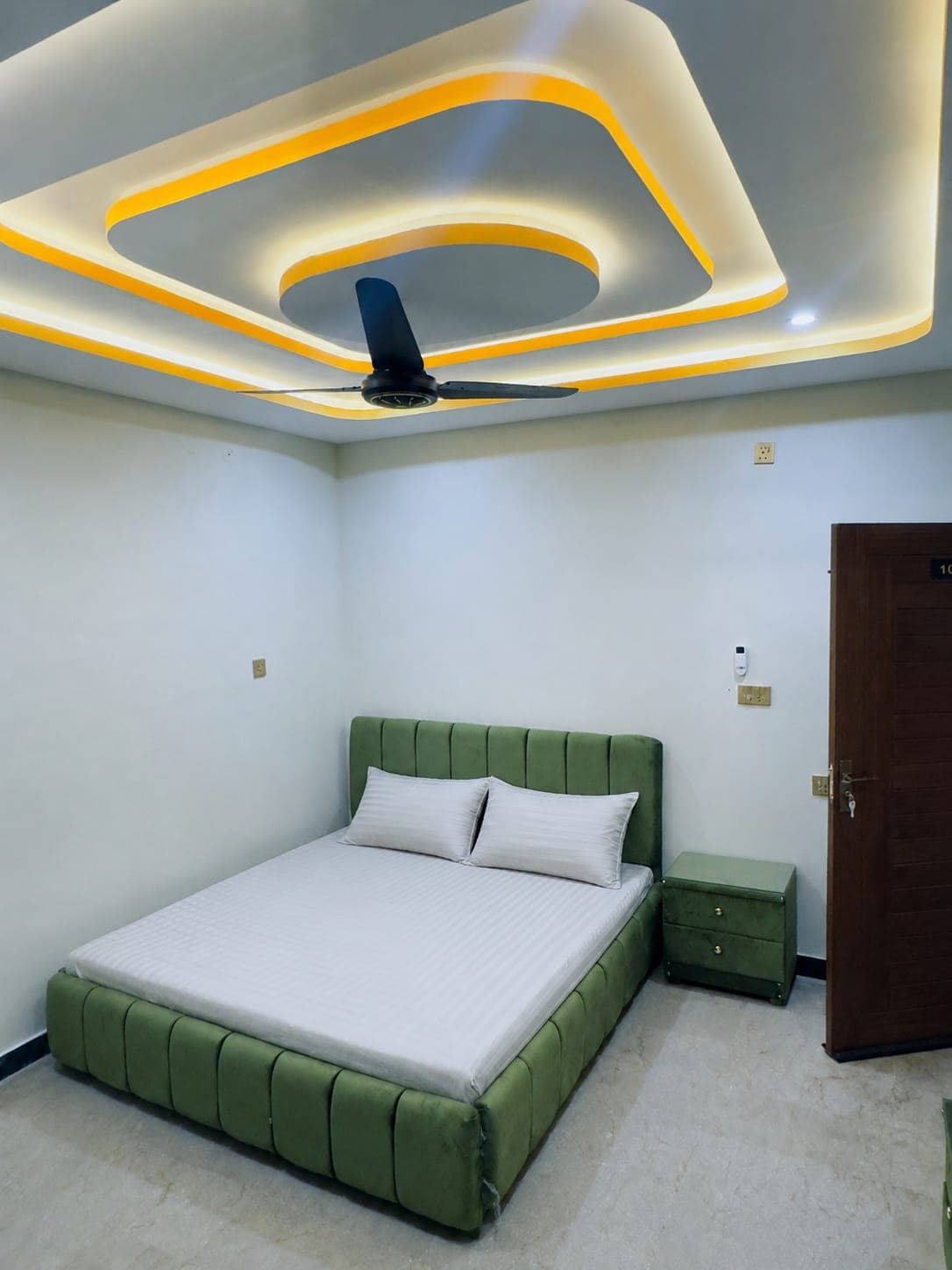
There is no quality accommodation directly in Katas or Choa Saidanshah. Chakwal city (40 km away) is the best base for visiting Katas Raj, with Chakwal Guest House being the most recommended option for tourists.
Chakwal Guest House
Near District Courts, Talagang Road, Chakwal
Frequently Asked Questions
What is the entry fee for Katas Raj Temples?
How far is Katas Raj from Chakwal?
How far is Katas Raj from Rawalpindi/Islamabad?
What is the best time to visit Katas Raj Temples?
How old are the Katas Raj Temples?
Where can I compare accommodation for a Katas Raj visit?
Is Katas Raj open all week?
Planning to Visit Katas Raj?
Compare current rooms at Chakwal Guest House and use live navigation to plan a Katas Raj visit. Confirm access and opening information with the relevant authority.